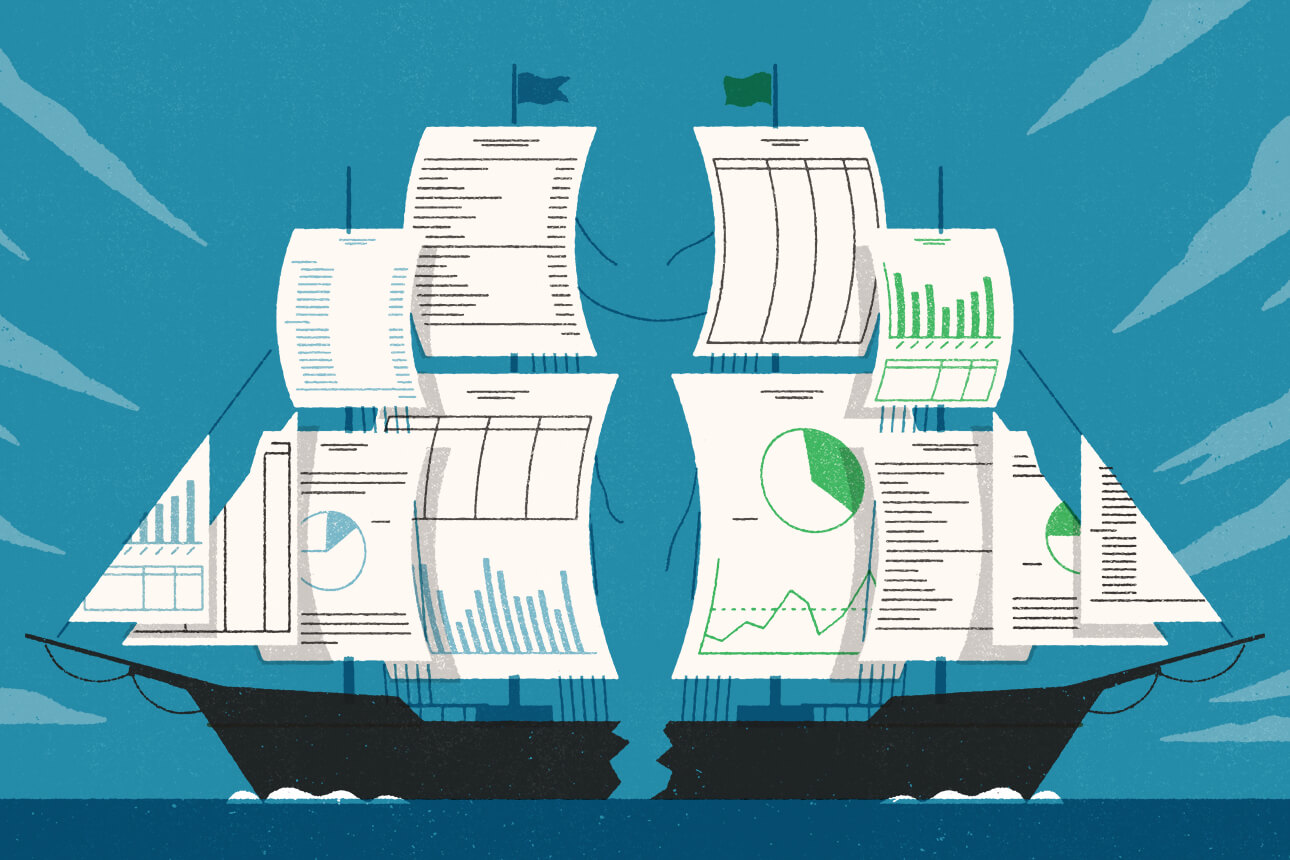

Managers need better strategies for managing collaboration. One option is to organize employees into pods: cross-discipline groups that mix and match on projects as needed. This structure requires less oversight and fewer meetings than multiproject environments that don’t use pods, and it can help keep employees from being pulled in too many directions.
In collaborative organizations, where teams are matrixed, workers are multi-allocated, and the work itself is often fluid, exploratory, or evolving, managers face a major challenge: Cooperation is often messy and opaque, and it rarely follows a linear path. Today’s joint work products and multiproject environments don’t have the simple measurability of, say, a 1930s Tayloristic assembly line.
Managers nonetheless feel the need to manage and often revert to meetings and interruptions, which reduce productive time and stress schedules. Meetings and their resulting to-do lists increase the need for oversight — which leads to more meetings. A single 30-minute meeting might seem like a small tax on efficiency. But when meetings are multiplied across overlapping projects, they can result in hours of context-switching and time-wasting. What’s worse, most productivity metrics fail to capture this inefficiency. Time card hours look full, projects appear to be staffed, and everybody says they’re busy — but in reality, people are treading water.
At one large automotive client that my company consulted with, the customer relationship communications group — which served multiple brands, regions, and internal service organizations — had reached a point of “meeting wars.” Meetings were being proactively scheduled simply to secure people’s time, which dug into their productivity weeks in advance.
Managers need better strategies to manage collaboration. Gallup polling data supports this: According to the latest “State of the Global Workplace” report, employee engagement globally “fell by two percentage points in 2024, costing the world economy an estimated $438 billion in lost productivity.” The sharpest decline for engagement was among managers themselves, who “have been squeezed between new executive priorities and employee expectations” in recent years, the report notes. Only 27% of managers surveyed reported feeling engaged at work.
There’s a solution to the overmanagement of collaboration. Organizing workers into midsize, multiproject pods — collections of people who mix and match on projects as needed — enables a shift in what managers can and should focus on. Organizing with pods can help managers drop many productivity-sapping activities in favor of a deceptively simple focus: making sure people really understand what they’re working on, using a powerful set of noninvasive metrics to track these more-effective operations.
#Tame #Collaboration #Complexity