



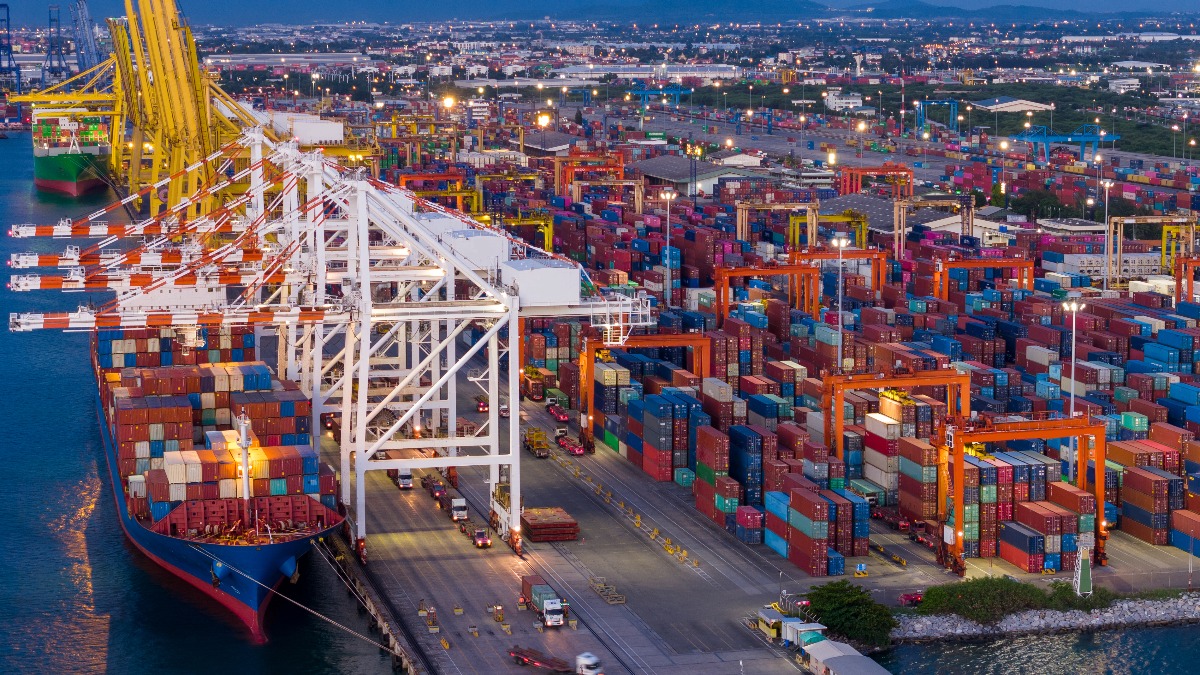
Séance d'information sur la facilitation des échanges et les règles d'origine
Un séance d'information tenue le 12 mai a exploré l'intersection entre la facilitation des échanges et les règles d'origine. La séance a été ouverte conjointement par le président du CRO et le président du Comité de la facilitation des échanges, M. Edem Kossi du Togo, soulignant les liens étroits entre les domaines de travail des deux comités’ .
La séance a offert aux membres l'occasion d'échanger des expériences sur les initiatives visant à faciliter le commerce et la conformité aux exigences liées à l'origine. Le discussions a couvert quatre grands thèmes : la numérisation des procédures liées à l'origine, les bonnes pratiques relatives aux preuves d'origine, les tendances et réformes visant à simplifier les règles d'origine, et le rôle des décisions anticipées dans le cadre de l'Accord sur les règles d'origine.
Dans son discours d'ouverture, Mme Tsang a déclaré : “Dans un environnement commercial de plus en plus complexe, la simplification n'est pas seulement un exercice technique – c'est une véritable nécessité. En réduisant la complexité inutile des règles d'origine et en promouvant leur transparence, nous pouvons contribuer à débloquer des opportunités commerciales, soutenir les entreprises et renforcer la résilience des chaînes d'approvisionnement mondiales.” Le CRO, a-t-elle ajouté, a un rôle à jouer dans la promotion de cet agenda et le partage d'expériences entre les membres de l'OMC.
M. Kossi a déclaré : “En continuant à moderniser et à faciliter tous les aspects des processus d'importation et d'exportation, y compris les règles d'origine, nous pouvons réduire davantage les coûts commerciaux, améliorer l'efficacité et garantir que les avantages du commerce international sont plus largement partagés. À cet égard, la mise en œuvre de l'Accord de l'OMC sur la facilitation des échanges peut donner un nouvel élan à la réforme des règles d'origine et à l'administration de l'origine.”
Des présentations ont été faites par le Secrétariat de l'OMC, le COMESA (Marché commun de l'Afrique orientale et australe) Secrétariat, l'Organisation mondiale des douanes (OMD), A.P. Moller – Maersk, et des représentants du Canada, du Chili, de la Chine, du Japon et du Viet Nam.
Mme Tsang a noté que rassembler les membres, les organisations internationales et le secteur privé aide à ancrer les discussions techniques du Comité‘s dans les réalités pratiques rencontrées par les autorités douanières, les commerçants et autres opérateurs économiques.
Initiatives et notifications de transparence
Deux membres ont soumis des notifications actualisées de leurs règles d'origine non préférentielles : la République kirghize et le Nigéria. La soumission du Nigéria était sa toute première notification au titre de l'article 5 de l'Accord sur les règles d'origine, tandis que la République kirghize a notifié des modifications aux règles d'origine non préférentielles applicables aux marchandises importées sur le territoire douanier de l'Union économique eurasiatique. L'article 5 de l'Accord de l'OMC sur les règles d'origine énonce les obligations de notification pour les membres concernant leurs règles d'origine non préférentielles.
Le Secrétariat de l'OMC a signalé que 58 membres ont notifié qu'ils appliquent des règles d'origine non préférentielles, 61 membres n'appliquent pas de telles règles et 21 membres n'ont pas encore communiqué cette information. Neuf membres ont maintenant actualisé leurs notifications en utilisant le « modèle » volontaire proposé par le Président du CRO en 2024.
Les membres ont poursuivi leurs travaux sur l'amélioration de la transparence des règles d'origine. Le Secrétariat a présenté des pratiques identifiées dans d'autres organes de l'OMC qui pourraient aider à améliorer le respect des obligations de notification,, en s'appuyant sur un rapport structuré préparé par le Conseil du commerce des marchandises. Cespratiques comprenaient la création de matériels de formation et de directives, de modèles de notification, de bases de données dédiées et de portails en ligne, et ainsi que l'organisation de sessions de partage d'expériences. Les membres ont accueilli favorablement la poursuite des discussions sur la manière d'améliorer la rapidité, la qualité et l'utilisabilité des notifications.
Les membres ont également convenu d'une proposition, coparrainée par l'Australie, le Canada, le Japon et le Royaume-Uni, visant à réorganiser les symboles de documents utilisés pour les notifications des règles d'origine préférentielles et non préférentielles, afin de faciliter la récupération des notifications par les délégations et de distinguer les différents types de règles d'origine. Les travaux du Secrétariat à ce sujet devraient être achevés plus tard en 2026.
Règles d'origine préférentielles pour les PMA
Les membres ont consacré une attention considérable à tracer une voie à suivre pour les travaux du Comité sur les règles d'origine préférentielles pour les PMA. Deux documents ont encadré la discussions: un soumission des membres accordant des préférences – l'Australie, le Canada, l'Union européenne, le Japon, la Suisse et le Royaume-Uni ; et un communication du Groupe des PMA intitulé « Reprendre les travaux sur les règles d'origine après la CM14 », visant à redéfinir le terrain des discussions.
Le Groupe a identifié six domaines de bonnes pratiques, couvrant à la fois les disciplines fondamentales des règles d'origine préférentielles (telles que la manière dont le pourcentage ad valorem est calculé) et les exigences procédurales que les commerçants doivent respecter pour bénéficier des préférences (telles que la preuve d'origine et le cumul).
Les membres ont accueilli favorablement les deux documents en tant que contributions constructives et ont signalé leur volonté de poursuivre l'engagement de manière bilatérale et au sein du Comité.
Autres Travail en comité
Le Royaume-Uni a présenté des mises à jour de son Régime de commerce préférentiel pour les pays en développement, un régime préférentiel qui réduit les droits de douane et simplifie les règles commerciales pour 65 pays en développement, y compris les PMA. Les mises à jour, entrées en vigueur le 1er janvier 2026, sont reflétées dans sa notification révisée au Comité. Les mises à jour incluent de nouveaux arrangements de cumul régional élargis en Afrique et en Asie, ainsi que des règles d'origine plus flexibles pour les produits d'habillement.
Le Japon a présenté ses activités de sensibilisation et de formation des commerçants sur les règles d'origine, partageant l'expérience de son portail en ligne dédié, de ses ateliers et de ses services de consultation. Le Secrétariat de l'OMD rapporté sur les activités de son Comité technique des règles d'origine. La Suisse a présenté un aperçu de l' Annexe spécifique K modernisée de la Convention de Kyoto révisée, l'accord international administré par l'OMD qui établit des normes communes pour simplifier et harmoniser les procédures douanières. L'annexe modifiée, adoptée en avril 2026, énonce des normes internationales sur les règles d'origine non préférentielles et préférentielles, y compris des dispositions sur le cumul, la preuve d'origine et l'autocertification.
Prochaines rencontres
Les prochaines réunions formelles du Comité sont prévues les 7 et 8 octobre 2026 et les 4 et 5 mai 2027.
Contexte
Les règles d'origine sont les critères nécessaires pour déterminer la source nationale d'un produit.
Il existe une grande variation dans la pratique des gouvernements en matière de règles d'origine. L'Accord de l'OMC sur les règles d'origine vise à harmoniser à long terme les règles d'origine, autres que celles relatives à l'octroi de préférences tarifaires, et à garantir que ces règles ne créent pas elles-mêmes d'obstacles inutiles au commerce. Il prévoit également des disciplines transitoires. Une annexe à l'Accord énonce une « déclaration commune » concernant le fonctionnement des règles d'origine pour les marchandises bénéficiant d'un traitement préférentiel.
De plus amples informations sur les travaux de l’OMC concernant les règles d’origine peuvent être trouvées à l’adresse suivante : www.wto.org/origin.
#WTO #News #items

 English
  简体中文
简体中文  繁體中文
繁體中文  Français
  Español
  Deutsch
  Русский
  日本語
日本語  한국어
한국어  العربية